The physical process of thermal evaporation coating mainly consists of three stages: material evaporation, transportation of gaseous particles, and deposition & film formation on substrates. During evaporation, materials absorb sufficient thermal energy to overcome intermolecular bonding energy, turning into gaseous molecules that escape from the surface of evaporation sources. These gaseous particles travel in straight lines with almost no collisions toward the substrate surface, where they condense, nucleate and grow into solid thin films.
Product Overview
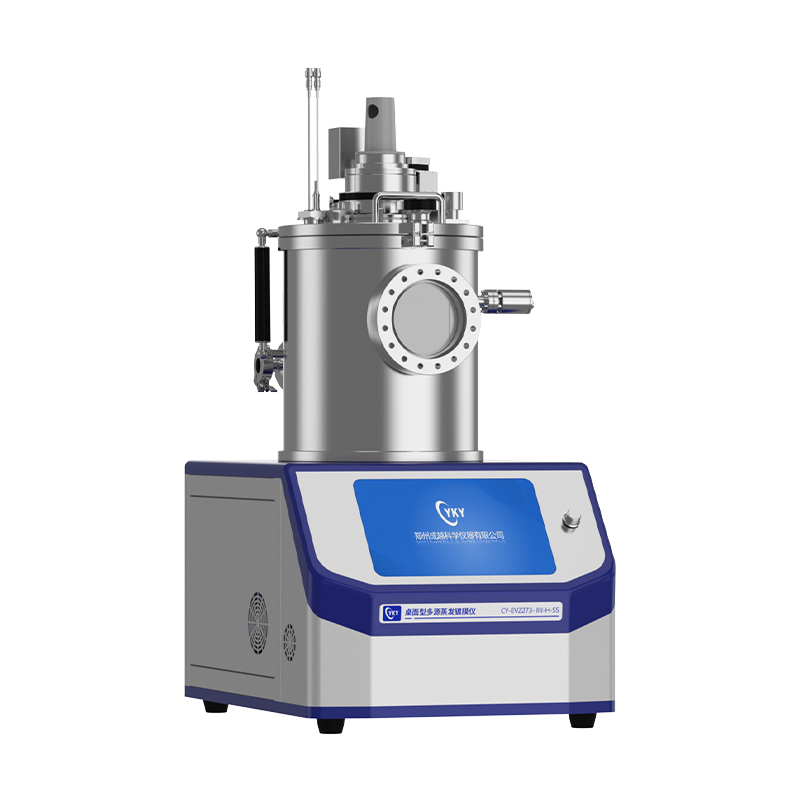
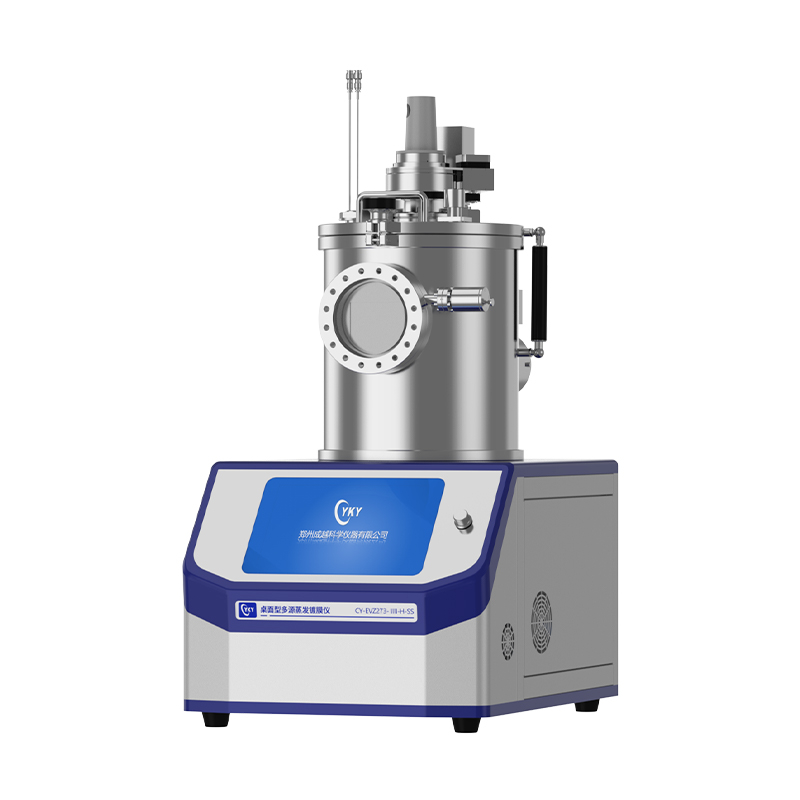
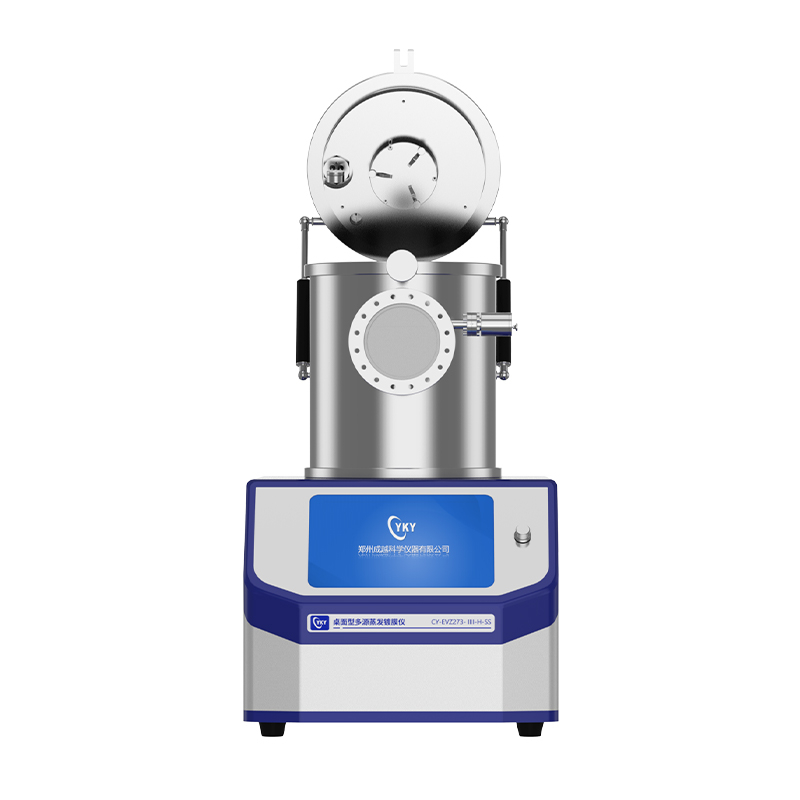
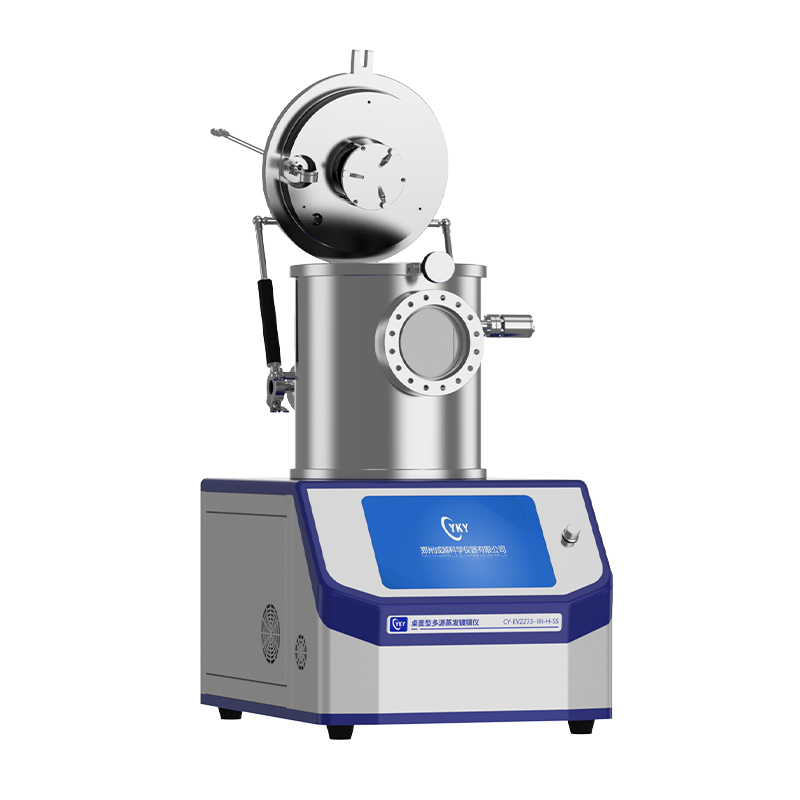
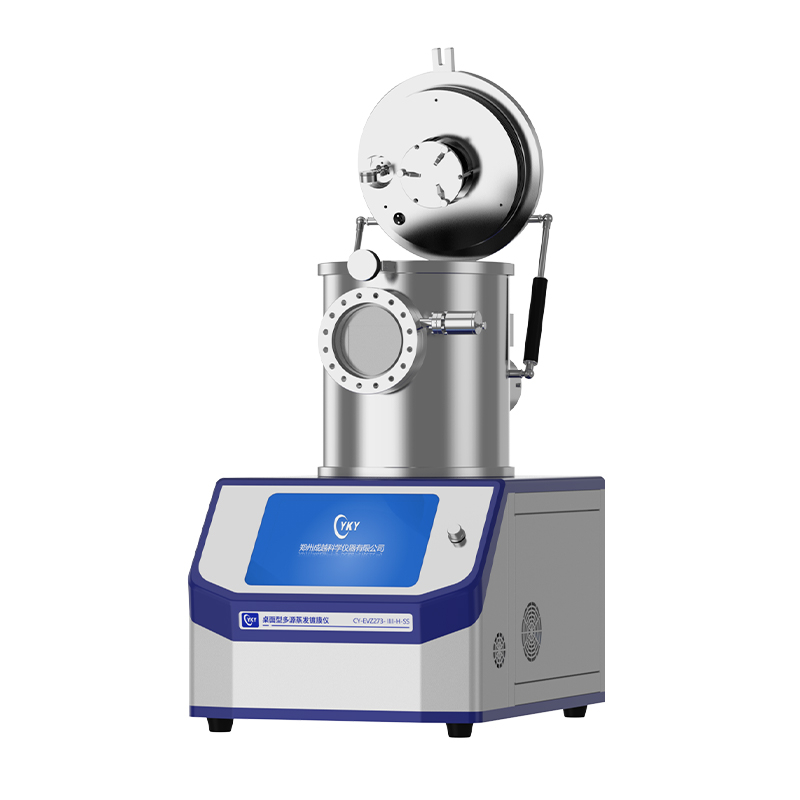
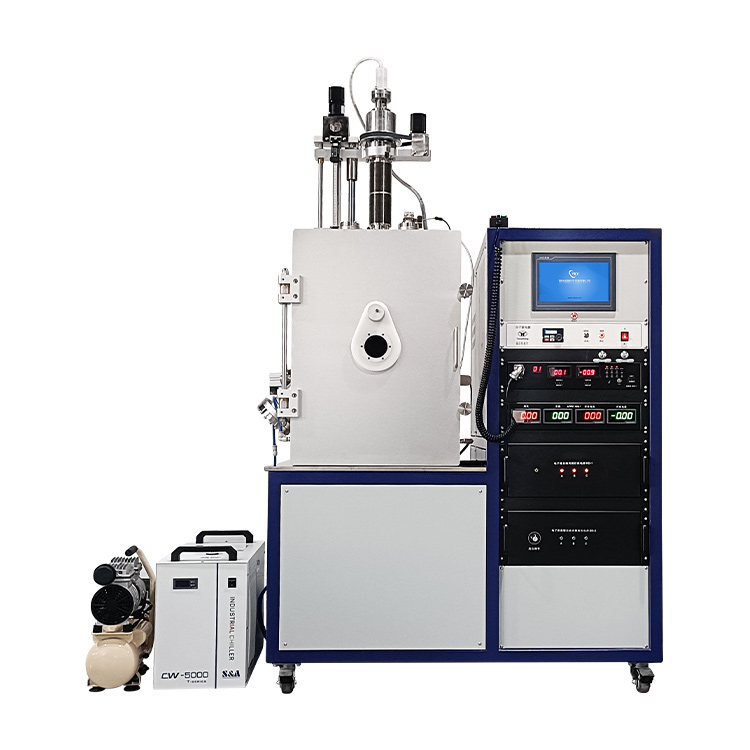
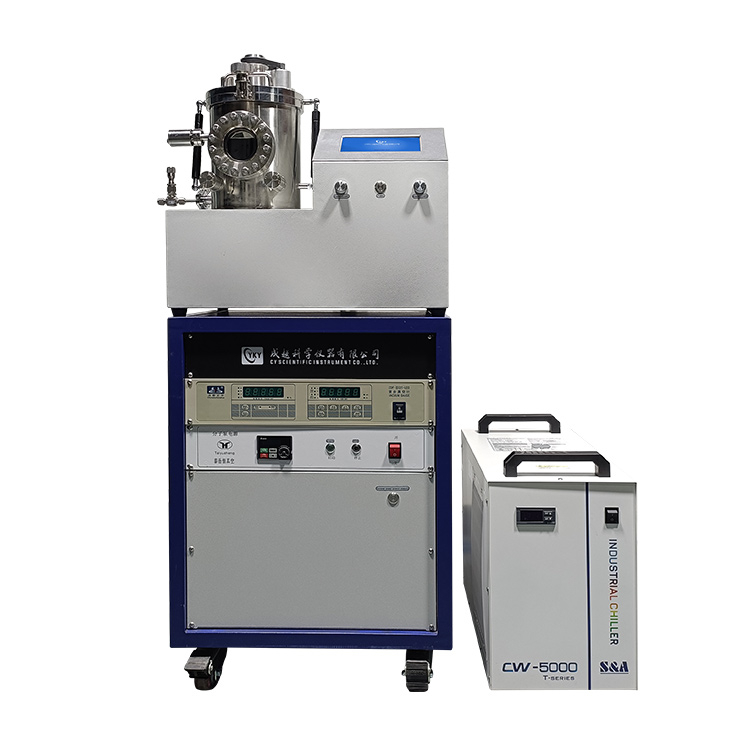
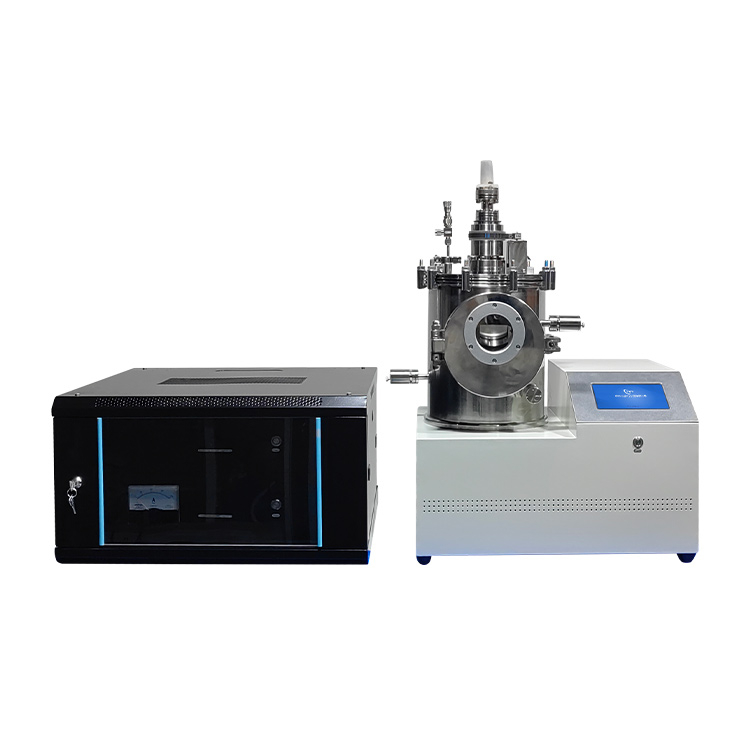
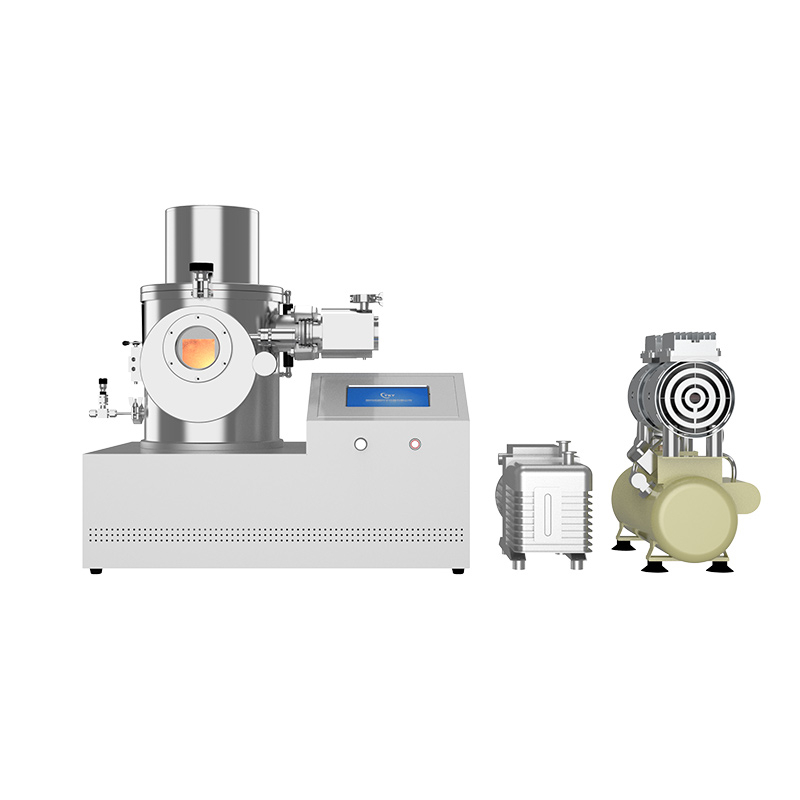
This compact desktop evaporation coater is specially designed for high-vacuum environments. It supports a maximum coating current of 150 A, suitable for evaporation of most common metals and partial non-metallic materials. The vacuum chamber is fabricated from stainless steel with degassing treatment before delivery. Equipped with a turbo molecular pump unit, the system can reach an ultimate vacuum of 5×10⁻⁵ Pa, satisfying the vacuum requirements for evaporation of most materials. The chamber adopts a front-opening door design for easy loading and unloading of samples. A vacuum viewing window with a magnetic baffle is installed to monitor coating processes; the baffle effectively prevents window contamination by coating materials.
Product Features of Evaporation Coating System
High-purity thin films Processed under high vacuum, collisions between gas molecules and evaporated materials are minimized, enabling fabrication of high-purity thin films.
Precise controllability Thermal evaporation technology enables accurate regulation of thin film thickness, composition and microstructure, which is critical for numerous high-precision applications.
Wide material compatibility Applicable to diverse materials including metals, alloys, oxides, carbides, nitrides and organic substances.
High deposition rate Especially for electron beam evaporation: high-energy electron beams rapidly heat target materials to achieve fast deposition.
Excellent uniformity Uniform thin films can be obtained over large-area substrates by optimizing process parameters.
Low substrate damage Heat is concentrated only on evaporation sources, resulting in minimal thermal impact on substrates, ideal for film deposition on heat-sensitive materials.
Multi-Source Evaporation Coating System Technical Parameters:
Product Name | Desktop Multi-Source Evaporation Coating System |
Product Model | CY-EVZ273-III-H-SS |
Vacuum Chamber – Material | Welded 304 stainless steel with polished surface |
Vacuum Chamber – Access Mode | Front door for sample and evaporant loading/unloading |
Vacuum Chamber – Viewing Window | Φ80 mm vacuum window with magnetic anti-contamination baffle |
Sample Stage – Max Sample Size | ≤100 mm |
Sample Stage – Rotation Speed | 0–20 RPM |
Sample Stage – Heating Temperature | RT ~ 500 ℃ |
Evaporation System – Evaporation Sources | 3 tungsten boats |
Evaporation System – Coating Method | Thermal Evaporation |
Vacuum System – Pumping Port | KF25 / KF40 |
Vacuum System – Exhaust Port | KF16 |
Vacuum System – Vacuum Measurement | Composite vacuum gauge |
Vacuum System – Fore Pump | Rotary vane pump, pumping speed: 1.1 L/s |
Vacuum System – Turbo Molecular Pump | Pumping speed: 600 L/s (Osaka molecular pump) |
Film Thickness Monitoring | Equipped with CYKY film thickness monitor |
Input Power Voltage | AC 220 V, 50 Hz |
Total Machine Power | 2 kW |
Overall Dimension | 440 mm × 600 mm × 775 mm |
Packing Weight | 70 KG |